
Introduction
When you are online running a business, it is likely that you would want more individuals to visit your website. The increase in the number of visitors is normally associated with increased sales, leads, and growth. However, the great question is “SEO PPC”: how do you get traffic?
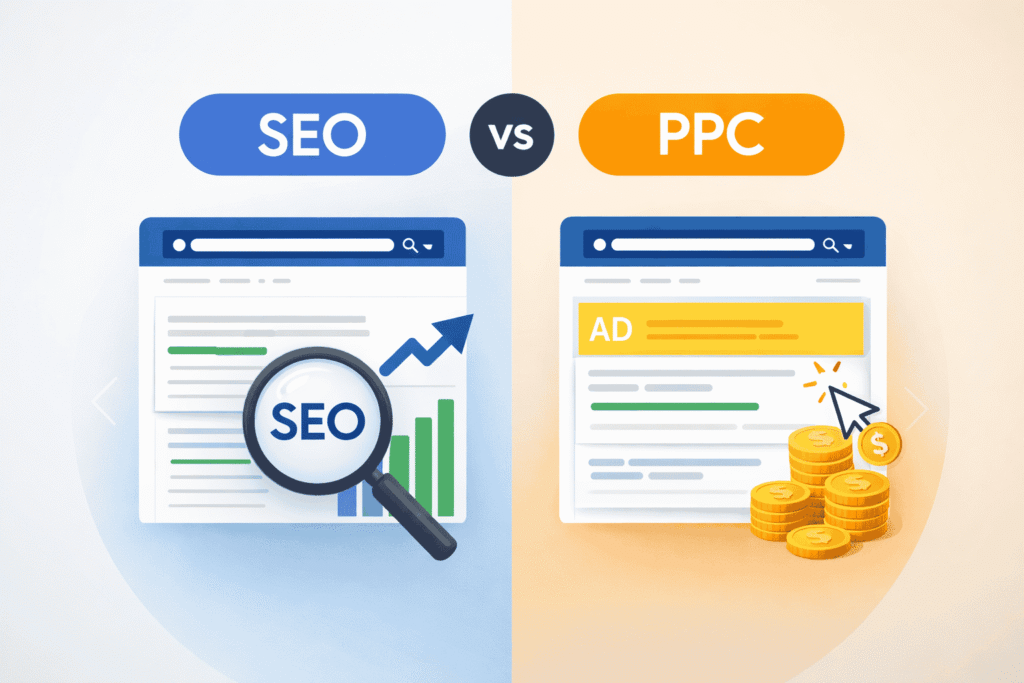
SEO (Search Engine Optimization) and PPC (Pay-Per-Click advertising) are two of the most used digital marketing strategies. Both assist your webpage to be listed in search engines such as Google, yet they operate so differently. SEO involves optimizing your site to enable it to be naturally listed in the search results, whereas PPC involves the use of money to place the ads at the top of the search results.
Most business owners have difficulties choosing one to use. Others feel that SEO is superior as it is free traffic, whereas some feel that PPC will yield fast results. The thing is that there is no universal solution. Depending on your objectives, financial resources, time, and business, the most appropriate option is to pick the best option.
What is SEO?
SEO (Search Engine Optimization) involves making your site appear at the top of the organic (free) search results. When an individual types a query in Google, he or she will find two categories of results, including ads and organic results. SEO will assist you in ranking amongst these organic listings.
SEO entails numerous activities, including
- Research on keywords that people search.
- Composition of useful and relevant material.
- Website optimization in terms of speed and structure.
- Obtaining backlinks on other websites.
- Improving user experience
- SEO is primarily aimed at making the search engines believe that you have valuable information in the website.
Benefits of SEO
1️⃣ Free Traffic
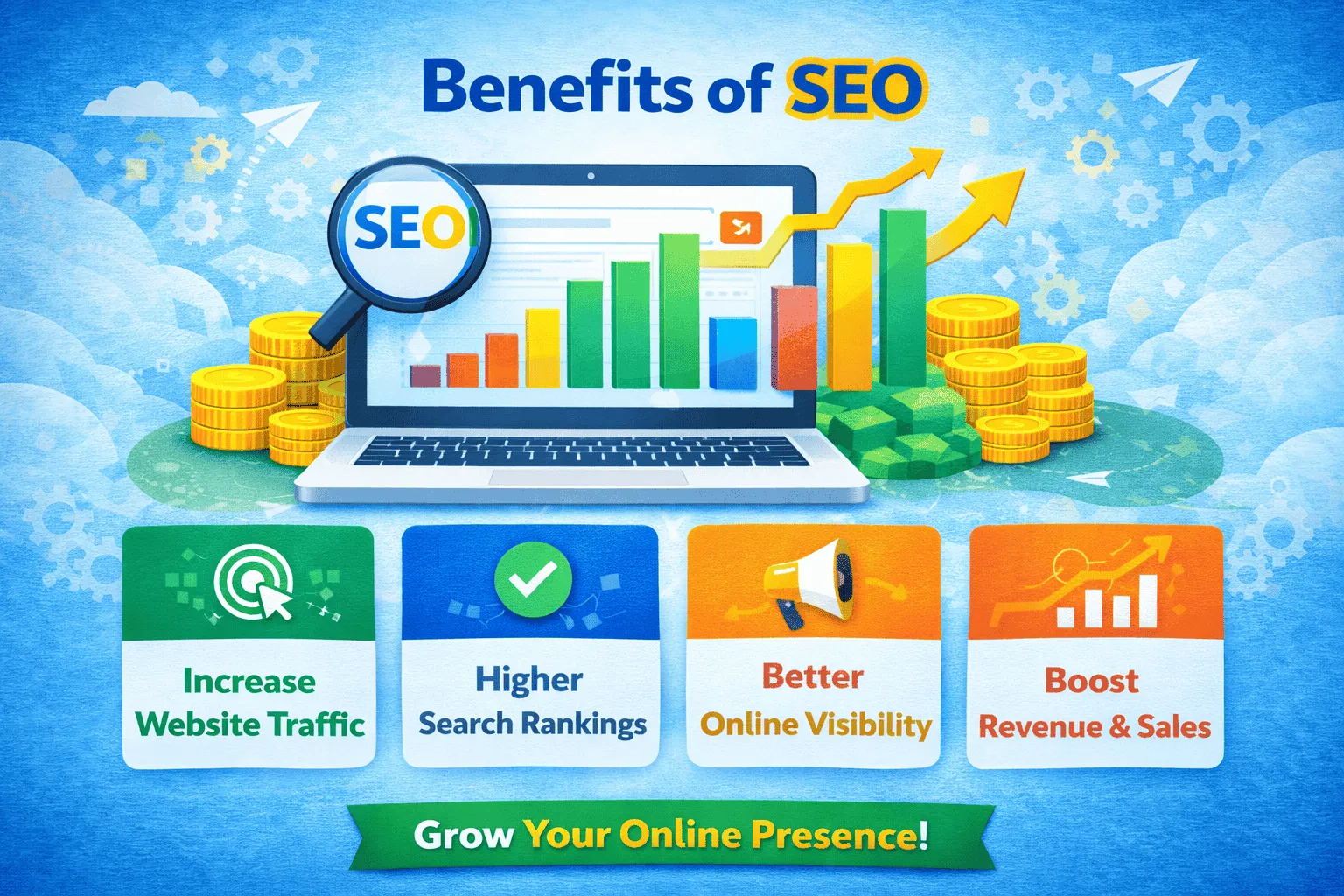
You don’t pay for each click. As soon as your page is ranked highly, you will not have to incur ad expenses before people visit your site.
2️⃣ Long-Term Results
SEO is more time-consuming, and its results are more long-term. A high-ranking page has the potential to bring traffic in months or years.
3️⃣ Trust and Credibility
Orgs are better than advertisements because of the way they are trusted by users.
4️⃣ Better ROI Over Time
Once the first attempt is made, SEO will be able to produce regular traffic without the need to keep spending.
Disadvantages of SEO
-
Takes time to show results
-
Requires ongoing effort
-
Google algorithm updates can affect rankings
-
Competitive keywords are hard to rank
SEO is like planting a tree—slow growth, but strong and lasting.
What is PPC?
PPC (Pay-Per-Click) refers to an online advertisement where one pays every time someone clicks on your advertisement. Google Ads is the most widespread platform.
In PPC, your advertisements will be displayed on the first page of a search engine immediately. You select keywords, select your budget, and write and manage ads.
Benefits of PPC
1️⃣ Instant Traffic
Your ads appear quickly after launching campaigns.
2️⃣ Highly Targeted Audience
You can target users based on location, device, behavior, and keywords.
3️⃣ Measurable Results
You can track clicks, conversions, and ROI easily.
4️⃣ Full Control
You control the budget, schedule, and targeting.
Disadvantages of PPC
-
Costs money per click
-
Traffic stops when you stop paying
-
Requires skill to optimize campaigns
-
Competitive industries can be expensive
PPC is like renting a house—fast access, but you keep paying.
Key Differences Between SEO and PPC
| Feature | SEO | PPC |
|---|---|---|
| Cost | Mostly time & effort | Pay per click |
| Speed | Slow results | Instant results |
| Longevity | Long-term | Short-term |
| Trust | Higher trust | Lower trust |
| Control | Less control | Full control |
| Traffic | Consistent | Stops when ads stop |
When SEO is the Better Choice
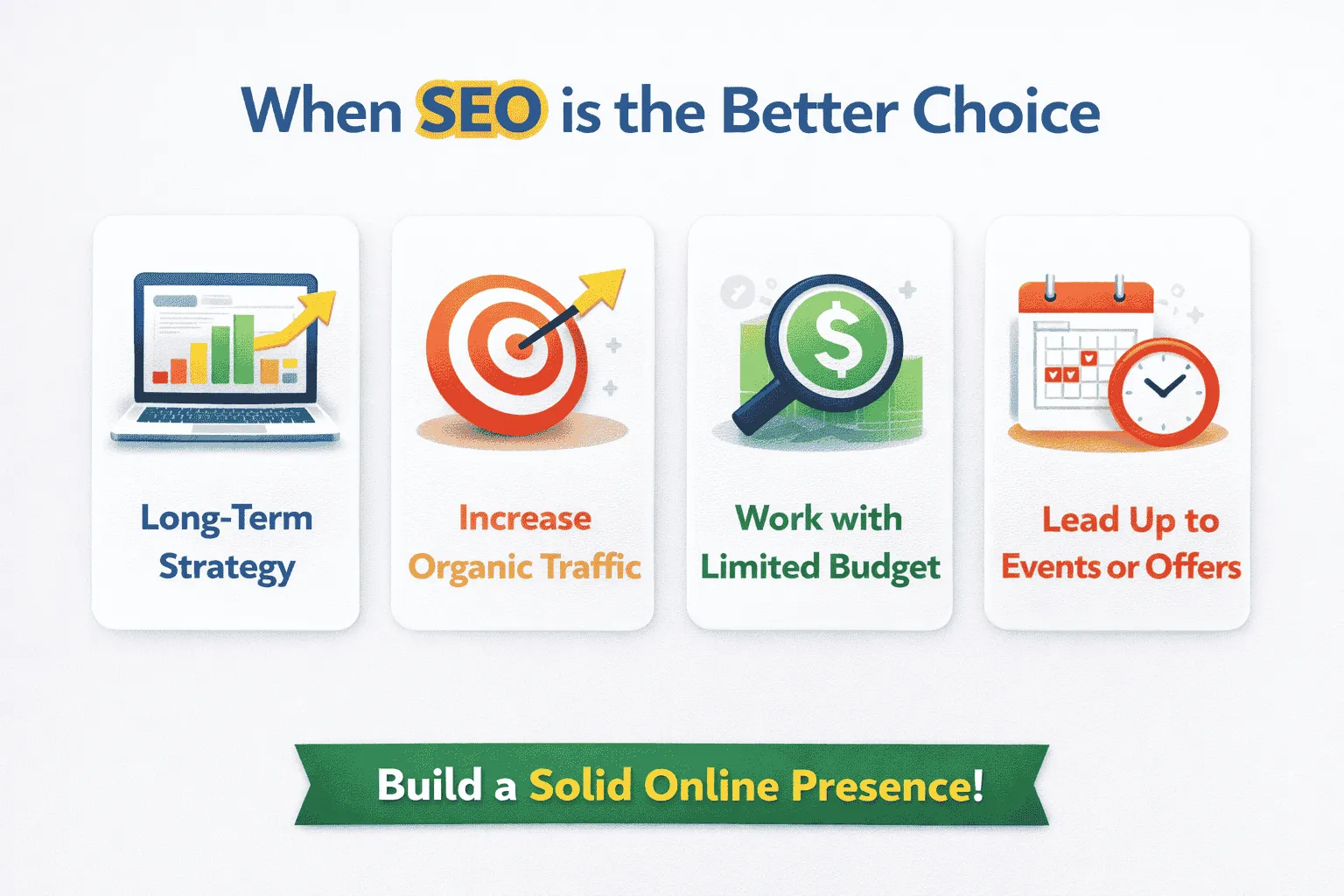
SEO is ideal if:
-
You want long-term growth
-
You have a limited advertising budget
-
You can invest time in content
-
You want brand credibility
-
Your niche benefits from informational searches
For example, blogs, affiliate websites, and educational platforms benefit greatly from SEO.
Small businesses building an online presence should start with SEO to create a strong foundation.
When PPC is the Better Choice
PPC is better if:
-
You want quick results
-
You’re launching a new product
-
You’re running time-limited promotions
-
You have a marketing budget
-
You want immediate leads
E-commerce stores and service providers often use PPC for fast conversions.
Combining SEO and PPC
Smart businesses don’t choose one—they use both.
Here’s why combining works:
-
PPC provides instant traffic
-
SEO builds long-term traffic
-
PPC keyword data improves SEO strategy
-
SEO reduces reliance on ads over time
For example:
Start PPC → Generate sales
Build SEO → Reduce ad spending
This balanced approach maximizes visibility.
Cost Comparison
SEO Costs
-
Content creation
-
Tools & software
-
Time investment
-
Link building
Even though clicks are free, SEO requires effort and resources.
PPC Costs
-
Ad spend
-
Campaign management
-
Testing & optimization
PPC can become expensive, especially in competitive industries.
Traffic Quality
SEO traffic usually comes from users searching for information or solutions. They trust organic results and may engage longer.
PPC traffic often comes from users ready to buy or take action.
SEO vs PPC have value, but PPC often converts faster, while SEO builds relationships.
Time to Results
-
SEO: 3–6 months minimum
-
PPC: Hours or days
If your business needs immediate leads, PPC wins.
If patience is possible, SEO wins.
Competition and Difficulty
Highly competitive keywords require:
-
Strong SEO authority
-
Large PPC budgets
New businesses may find PPC easier initially while building SEO authority over time.
ROI Comparison
Short-term ROI → PPC
Long-term ROI → SEO
SEO investment grows value over time.
PPC provides fast, measurable returns but stops when funding stops.
Decision Guide: Which Should You Choose?
Choose SEO if:
✅ You want sustainable growth
✅ You can wait for results
✅ You prefer lower long-term cost
Choose PPC if:
✅ You want immediate visibility
✅ You need quick sales
✅ You have an ad budget
Choose BOTH if:
✅ You want maximum reach
✅ You plan serious digital growth
✅ You aim to dominate search results
Future Trends in SEO and PPC
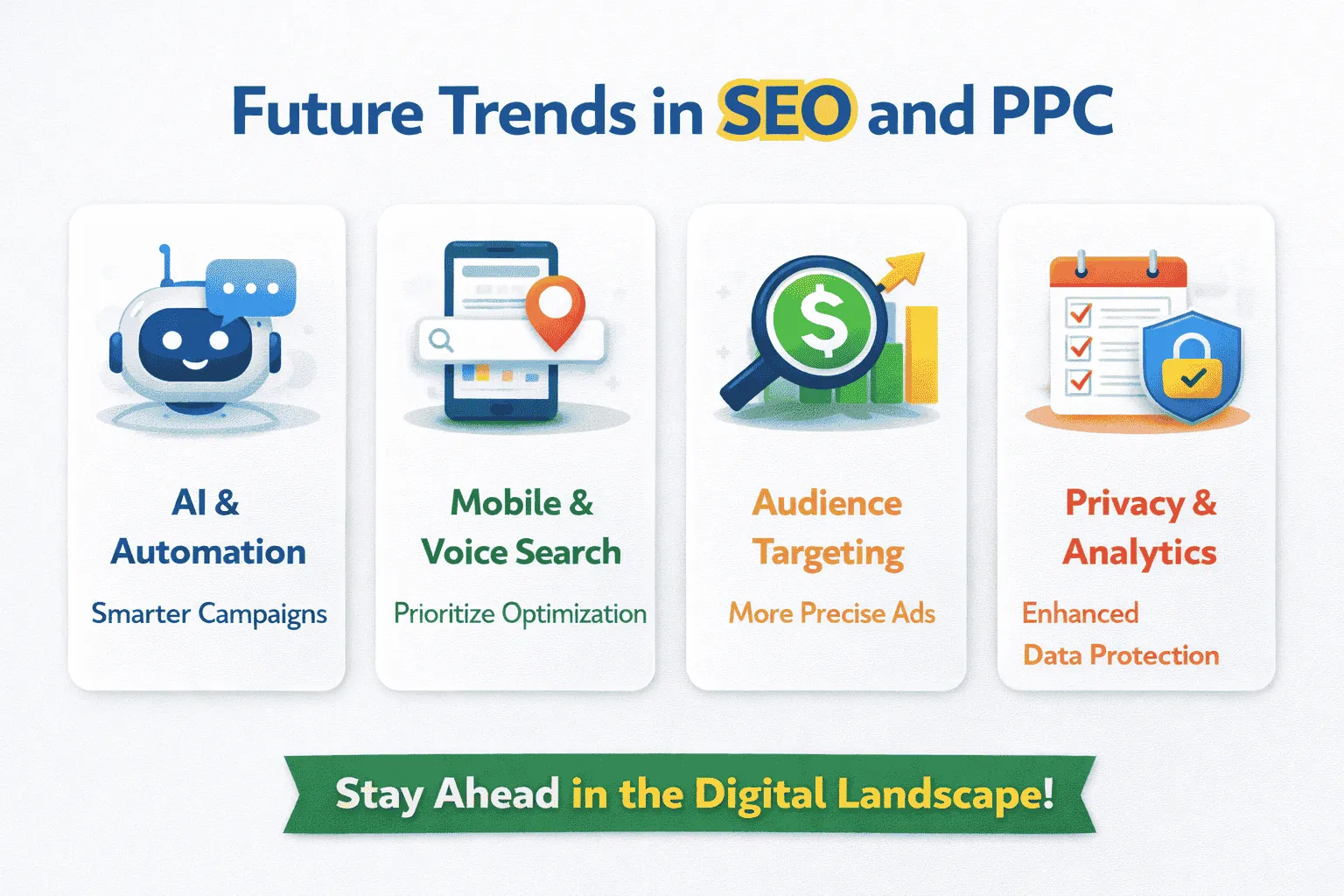
Digital marketing keeps evolving.
SEO Trends:
-
AI-driven search
-
Voice search optimization
-
User experience ranking signals
PPC Trends:
-
Automation and smart bidding
-
AI ad targeting
-
Better personalization
Businesses must stay updated to remain competitive.
Common Mistakes to Avoid
❌ Ignore SEO complete
❌ Spending blindly on ads
❌ Not tracking analytics
❌ Expecting instant SEO results
❌ Running PPC without a strategy
Success in SEO over PPC is attributable to balanced planning.
Conclusion
SEO and PPC are very strong marketing tools, but their applications differ. SEO lays a solid ground for long-term developments, confidence, and traffic. PPC offers immediate coverage, a narrow focus, and expedited responses.
It does not answer the question of what is better; the best thing is to do is to depend on your business objectives, time, and budget. Most of the successful firms use both strategies to have the best of both worlds.
Consider SEO as a long-term investment and PPC as an accelerator. When applied intelligently in combination, they will develop a strong digital marketing system that will attract traffic, gain authority, and raise income.