
How to do SEO for a website
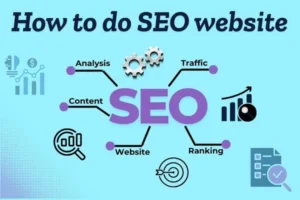
SEO (Search Engine Optimization) is the process of improving a website so it appears higher in search engine results like Google. The goal of SEO is to increase organic (non-paid) traffic by making your site more visible, relevant, and trustworthy for the keywords your audience is searching for.
In simple terms, SEO helps your website show up when people search for products, services, or information related to your business. A strong SEO strategy involves optimizing your website content, improving technical performance, building quality backlinks, and consistently creating valuable content that matches user intent.
Website Structure and SEO-Friendly Architecture
What Is Website Structure?
Website structure refers to the way pages on a website are organized and connected to each other. It determines how users navigate your website and how search engines crawl and understand your content. A well-structured website creates a clear path for both visitors and search engine bots, ensuring that important pages are easily accessible and logically arranged. When the structure is organized, it reduces confusion and improves overall website performance.
- Organizes pages in a logical way
- Helps search engines crawl efficiently
- Improves user navigatio
- Reduces confusion and clutter
- Supports better indexing
Importance of SEO-Friendly Architecture
SEO-friendly architecture is essential for achieving higher rankings in search engines. When your website is properly structured, search engines can easily understand the relationship between pages and identify the most important content. A strong architecture also enhances user experience, which plays a significant role in SEO performance. If users can find information quickly, they are more likely to stay longer on your site
- Improves crawlability and indexatio
- Strengthens content hierarch
- Enhances user experienc
- Reduces bounce rate
- Increases ranking potential
Creating a Clear Content Hierarchy
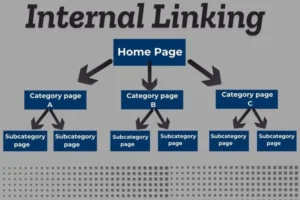
A clear content hierarchy starts with the homepage at the top, followed by main categories, subcategories, and individual pages. This structured format helps search engines understand the importance of each page and how different sections are related. Proper hierarchy also ensures that authority flows from top-level pages to deeper pages, improving overall SEO strength.
- Homepage acts as the main authority pag
- Categories group related conten
- Subcategories organize detailed topic
- Prevents content duplication
- Keeps the website scalable and organized
SEO-Friendly URL Structure
URLs are an important part of website architecture because they communicate information about a page. SEO-friendly URLs are clean, short, and descriptive. They should include relevant keywords and reflect the site structure. Clear URLs make it easier for users to understand page content and for search engines to categorize it correctly.
- Use short and descriptive URL
- Include primary keywords
- Avoid unnecessary numbers or symbols
- Use hyphens to separate words
- Keep URLs consistent across the website
Internal Linking Strategy
Internal linking connects related pages within your website and strengthens its architecture. It helps search engines discover new content and understand topic relationships. Internal links also distribute authority from high-ranking pages to other important pages, improving their chances of ranking. A strong internal linking strategy keeps users engaged and increases page views.
- Connect related content naturally
- Use descriptive anchor text
- Avoid excessive linking
- Link important pages from high-traffic page
- Prevent orphan pages
Navigation and User Experience
Navigation directly impacts how users interact with your website. A simple and clear menu structure helps visitors quickly find what they are looking for. Complicated navigation can frustrate users and increase bounce rates. Breadcrumb navigation further improves usability by showing users their location within the site structure.
- Keep menu structure simple
- Limit dropdown levels
- Make navigation mobile-friendly
- Use breadcrumb navigation
- Highlight important pages in the menu
Role of XML Sitemap
An XML sitemap acts as a roadmap for search engines by listing all important pages on your website. It ensures that search engines can discover and index your content efficiently. Even pages that are deeply nested within the site can be found through the sitemap, improving overall crawlability.
- Lists important URLs
- Helps search engines crawl faster
- Should be submitted to Google Search Console
- Exclude duplicate or low-quality pages
- Update regularly when adding new content
Keyword Research – The Foundation of SEO
Keyword research is the backbone of every successful SEO strategy. It is the process of finding and analyzing the words and phrases people type into search engines like Google when looking for information, products, or services. If you understand what your audience is searching for, you can create content that directly answers their needs. Without proper keyword research, even high-quality content may fail to attract traffic because it is not aligned with user search intent.
Why Keyword Research Is Important
Keyword research helps you understand your target audience better. It shows you what topics are popular, what problems people are trying to solve, and how competitive certain search terms are. When you target the right keywords:
- You attract relevant traffic to your website.
- You improve your chances of ranking higher in search results.
- You create content that matches user intent.
- You increase conversions by targeting users who are ready to take action.
In simple words, keyword research connects your content with the people who are actively searching for it.
Understanding Search Intent
Search intent refers to the reason behind a user’s search query. There are generally four main types of search intent:
Informational – The user wants information (e.g., “what is SEO”)
Navigational – The user wants to visit a specific website (e.g., “Facebook login”).
Transactional – The user wants to buy something (e.g., “buy SEO tools online”).
Commercial Investigation – The user is comparing options (e.g., “best SEO tools 2026”).
Types of Keywords
There are different types of keywords you should know:
Short-tail keywords – Broad and highly competitive (e.g., “SEO”).
Long-tail keywords – More specific and less competitive (e.g., “best SEO tips for beginners”)
Branded keywords – Include a brand name (e.g., “Ahrefs keyword tool”)
Local keywords – Target a specific location (e.g., “SEO services in Lahore”).
For beginners and new websites, long-tail keywords are often easier to rank for and bring more targeted traffic.
How to Do Keyword Research
Start with a main topic – For example, “SEO for beginners.”
Brainstorm related ideas – Think about questions your audience may ask
Use keyword research tools – Tools like Google Keyword Planner, Ubersuggest, and Google Search suggestions can help you find keyword ideas.
Check search volume and competition – Choose keywords with good search volume and low to medium competition
Analyze competitors – See which keywords your competitors are ranking for
Select primary and secondary keywords – Use one main keyword and several related keywords in your content.
Keyword Metrics You Should Understand
When choosing keywords, pay attention to:
- Search Volume – How many times a keyword is searched monthly
- Keyword Difficulty – How hard it is to rank for that keyword.
- CPC (Cost Per Click) – Indicates commercial value.
- Competition Level – Shows how many websites are targeting that keyword.
Website Structure and SEO-Friendly Architecture
Website structure and SEO-friendly architecture refer to how a website is organized, linked, and designed so that both users and search engines can easily navigate and understand it. A well-structured website follows a clear hierarchy, starting from the homepage, then moving to main categories, subcategories, and individual pages. This organized structure helps search engines crawl and index pages efficiently while also improving user experience. When visitors can quickly find the information they are looking for, they tend to stay longer on the website, which positively impacts SEO performance.
An SEO-friendly architecture also includes clean URLs, logical internal linking, mobile-friendly design, and fast loading speed. Each page should be connected properly through internal links so that search engines can discover all important content. Breadcrumb navigation, XML sitemaps, and proper use of categories further strengthen the structure. When a website is technically organized and easy to navigate, it increases the chances of ranking higher in search engine results and builds trust with users.
Technical SEO – Optimizing the Website Backend
Technical SEO refers to the process of optimizing the backend structure of a website to help search engines crawl, index, and understand it more effectively. Unlike on-page SEO, which focuses on content and keywords, technical SEO works behind the scenes to improve the website’s performance and functionality. It ensures that search engine bots can access all important pages without errors and that the website meets modern search engine requirements.
Optimizing the website backend includes improving website speed, ensuring mobile-friendliness, fixing broken links, using HTTPS for security, creating XML sitemaps, and properly configuring the robots.txt file. It also involves managing structured data, canonical tags, and eliminating duplicate content issues. When the technical foundation of a website is strong, search engines can process it efficiently, which increases the chances of better rankings and provides users with a smooth browsing experience.
On-Page SEO – Optimizing Individual Pages
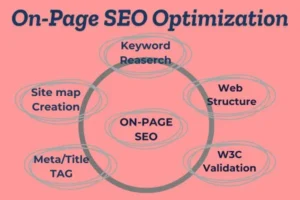
What Is On-Page SEO?
On-Page SEO is the practice of optimizing individual web pages to improve their search engine rankings and attract relevant organic traffic. It focuses on both the visible content and the underlying HTML elements of a page. The main goal is to help search engines clearly understand what the page is about while also making it useful and engaging for users.
Content Optimization
Content is the core of on-page SEO. Each page should provide high-quality, informative, and original content that satisfies user intent. Keywords should be used naturally in the content, especially in important areas like the introduction and subheadings, without keyword stuffing. Well-structured content with clear paragraphs improves readability and user engagement.
Title Tags and Meta Descriptions
Title tags and meta descriptions are essential elements of on-page optimization. A well-written title tag should include the main keyword and clearly describe the page topic. The meta description should be compelling and informative to encourage users to click on the page in search results.
Proper Use of Headings
Headings such as H1, H2, and H3 help organize content and make it easier to read. The H1 tag should clearly define the main topic of the page, while H2 and H3 tags should structure the content into logical sections. This improves both user experience and search engine understanding.
URL Structure and Internal Linking
SEO-friendly URLs should be short, clean, and descriptive. Internal linking connects related pages within the website, helping search engines discover content and distribute ranking authority across pages. A strong internal linking strategy also keeps users engaged for longer periods.
Image Optimization and User Experience
Images should be optimized with proper file names and alt text to improve accessibility and search visibility. Page speed, mobile-friendliness, and easy navigation also play an important role in on-page SEO. When individual pages are fully optimized, they perform better in search results and provide a smoother experience for visitors.
Measuring SEO Performance and Results
Why Measuring SEO Performance Is Important
Measuring SEO performance is essential to understand whether your strategies are working or not. Without tracking results, it is impossible to know if your website is improving in search rankings, attracting more visitors, or generating conversions. Regular analysis helps identify strengths, weaknesses, and areas that need improvement, allowing you to adjust your SEO strategy effectively.
Tracking Organic TrafficOrganic traffic is one of the most important indicators of SEO success. It shows how many visitors are coming to your website from search engines without paid ads. An increase in organic traffic usually means your keywords and content are performing well. Tools like Google Analytics help monitor traffic trends and user behavior.
Monitoring Keyword Rankings
racking keyword rankings helps you see how your target keywords are performing in search engine results. If your rankings improve over time, it indicates that your SEO efforts are effective. If rankings drop, it may signal technical issues, strong competition, or the need for content updates.
Analyzing User Engagement MetricsUser engagement metrics such as bounce rate, average session duration, and pages per session provide insights into how visitors interact with your website. High engagement usually means your content is relevant and valuable, while poor engagement may suggest that improvements are needed.
Measuring Conversions and GoalsSEO success is not just about traffic; it is also about achieving business goals. Conversions such as form submissions, purchases, or newsletter sign-ups show whether your website is turning visitors into customers. Setting up goals in analytics tools helps track these actions accurately.
Using SEO Tools for Reporting Various SEO tools help measure and analyze performance. Google Search Console provides data on impressions, clicks, and indexing status. Google Analytics shows user behavior and traffic sources. Advanced tools can also provide backlink analysis and competitor insights. Regular reporting ensures continuous improvement and long-term SEO growth.
SEO Tools You Should Use
Google Analytics
Google Analytics is a powerful tool that helps you track website traffic and user behavior. It shows how many visitors come to your site, where they come from, which pages they visit, and how long they stay. This data helps you understand user engagement and measure SEO performance more accurately.
Google Search Console
Google Search Console allows you to monitor how your site appears in Google search results. It provides data on search impressions, clicks, keyword rankings, and indexing issues. You can also submit sitemaps and fix errors to improve your website’s visibility.
Keyword Research Tools
Keyword research tools help you find relevant keywords that your audience is searching for. Tools like Ahrefs, SEMrush, or Ubersuggest show search volume, competition levels, and keyword ideas. Using the right keywords helps optimize content and improve rankings.
Backlink Analysis Tools Backlink analysis tools allow you to monitor the quality and quantity of websites linking to yours. Tools like Moz Link Explorer and Majestic help you understand your backlink profile and find opportunities to build more high-quality links, which can boost your search rankings.
Page Speed and Performance ToolsPage speed tools, such as Google PageSpeed Insights and GTmetrix, analyze your website’s loading speed and performance issues. Faster websites offer better user experience and are favored by search engines, making these tools essential for technical SEO.
On-Page SEO ToolsOn-page SEO tools like Yoast SEO and Rank Math help optimize individual pages by providing suggestions for keyword placement, meta tags, readability, and content structure. These tools make it easier to follow best practices for on-page optimization.
Off-Page SEO and Link Building
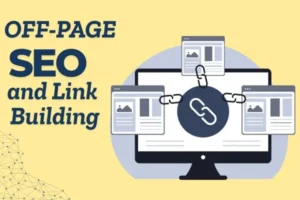
Off-Page SEO and link building focus on improving a website’s authority and credibility through activities that happen outside the website itself. The main goal is to build high-quality backlinks from relevant and trustworthy websites, as search engines consider these links as signals of trust and popularity. When other reputable websites link to your content, it increases your site’s authority and improves its chances of ranking higher in search results. Effective off-page SEO is not about getting a large number of links, but about earning natural, relevant, and valuable backlinks that strengthen your website’s overall reputation and visibility.
Common SEO Mistakes to Avoid
Ignoring Keyword Research
One of the most common SEO mistakes is not doing proper keyword research. Targeting the wrong keywords or highly competitive terms without strategy can prevent your content from ranking. Choosing relevant keywords with proper search intent is essential for success.
Keyword Stuffing
Using too many keywords unnaturally in your content can harm your rankings. Search engines prefer natural, user-friendly content. Keyword stuffing makes content difficult to read and may lead to penalties.
Poor Website Structure
A confusing website structure makes it difficult for search engines to crawl and index pages. If important pages are not properly linked, they may not rank well. A clear hierarchy and internal linking strategy are important.
Ignoring Mobile Optimizationwith most users browsing on mobile devices, a website that is not mobile-friendly can lose rankings and traffic. Responsive design and fast loading speed are essential for better SEO performance.
Slow Page SpeedSlow-loading websites negatively affect user experience and search rankings. Optimizing images, reducing unnecessary scripts, and improving hosting performance can help increase speed.
Not Updating Old ContentSEO is not a one-time task. Ignoring outdated content can cause rankings to drop over time. Regularly updating and improving old content keeps your website relevant and competitive.
Overlooking Technical SEOTechnical issues like broken links, duplicate content, missing meta tags, or improper indexing can limit your website’s performance. Regular SEO audits help identify and fix these problems.