
One of the most effective methods of increasing a site and appealing to the visitors without the use of paid advertisements is Search Engine Optimization (SEO). Nonetheless, the question of the duration of SEO to yield results has been raised several times by many novices, as well as site proprietors. In comparison to instant marketing strategies, SEO is a slow strategy that requires enhancement of website structure, content postings, and the generation of credibility over time. Before search engines determine rankings, they must take time to find your pages, comprehend their relevancy, and make comparisons with competing pages. Due to this, the process of progress does not occur simultaneously. A realistic timeline of SEO can also be understood, and one can set the right expectations to avoid frustration.
Understanding SEO in a Simple Way
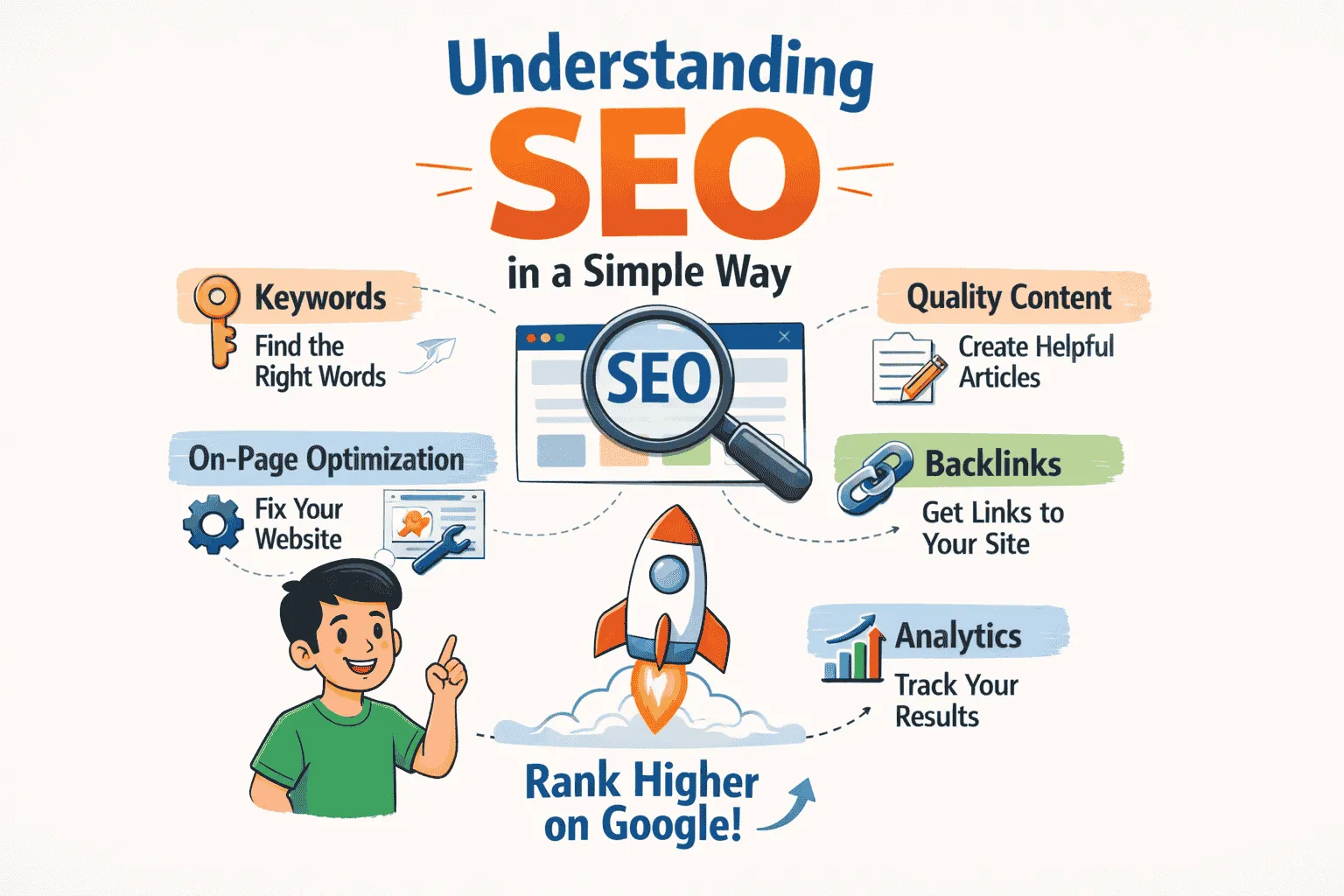
Consider SEO as the development of a tree. You put a seed, water it, and take care of it. You are not going to get fruit tomorrow. One grows first roots, then branches, and then fruit is produced.
SEO works the same way.
To optimize your website, search engines require time to:
-
Discover your pages
-
Understand your content
-
Evaluate its quality
-
Compare it with competitors
-
Decide ranking positions
Because of this process, SEO results come step by step.
A Realistic SEO Timeline (Month by Month)
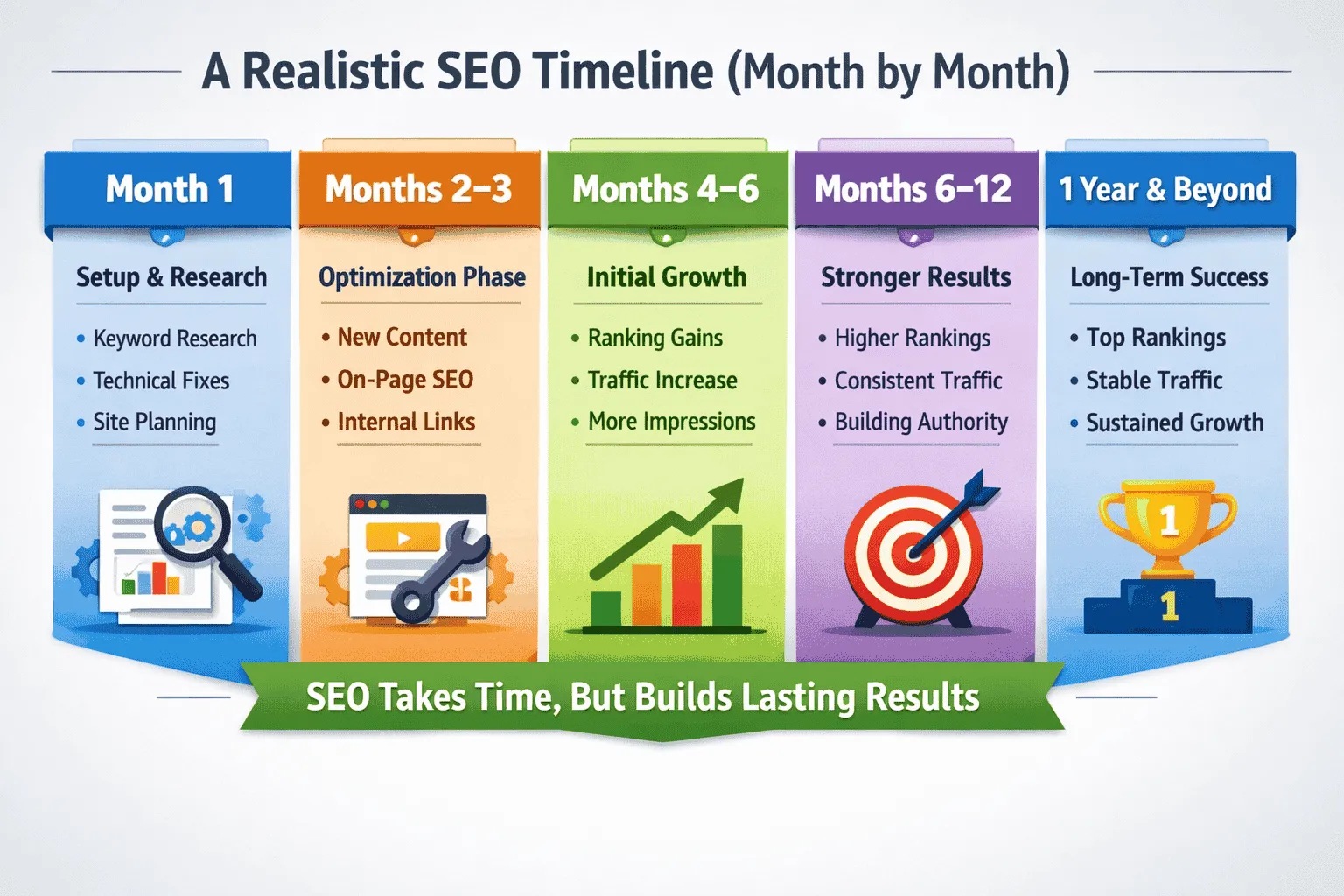
A realistic SEO plan is developed over time and not overnight. The initial month is characterized by research work, technical corrections, and content preparation, where the traffic change is not noticeable. Months two and three are months of maximization of articles in search results, and minor ranking fluctuations can be observed. After four to six months, the regularity of the publications may result in an observable increase in impressions and visitors. Six to twelve months later, the authority might have established itself and better rankings and consistent traffic. In a period of more than a year, consistent work may generate consistent visibility anda sustainable increase, which is why SEO is a viable approach to generating organic traffic.
Month 1—Setup and Foundation
During the first month, you usually prepare your website rather than expecting traffic.
Common tasks include:
-
Keyword research
-
Fixing technical issues
-
Improving page titles and descriptions
-
Planning content topics
-
Submitting sitemap
At this stage, search engines are just starting to notice your changes.
What you may see:
-
Pages getting indexed
-
No major ranking changes
-
Little or no traffic
This phase is about preparation, not results.
Months 2–3—Publishing and Optimization
Now, content creation and optimization begin seriously.
You may:
-
Publish articles regularly
-
Improve headings
-
Add internal links
-
Optimize images
Search engines start testing your pages in rankings.
What you may notice:
-
Some keywords appear in search results
-
Rankings move up and down
-
Small traffic increases
This stage often requires patience because results are still forming.
Months 4–6—First Visible Growth
This is where effort begins to show impact.
If content quality is good and SEO is applied properly:
-
Pages rank for easier keywords
-
Organic traffic increases
-
Impressions grow
Backlinks and consistency begin improving site trust.
Typical outcomes:
-
Noticeable visitors
-
Data insights in analytics
-
Early monetization opportunities
Many website owners feel encouraged during this stage.
Months 6–12—Real Progress
SEO momentum builds.
With continued publishing and optimization:
-
Rankings become stronger
-
Traffic stabilizes
-
Authority increases
You may see:
-
Regular daily visitors
-
Better engagement
-
Possible income growth
This phase often brings meaningful business results.
Beyond One Year—Long-Term Authority
SEO rewards long-term dedication.
After a year of consistent work:
-
Top rankings become realistic
-
Brand recognition grows
-
Traffic becomes reliable
This is where SEO becomes truly powerful because results compound over time.
Factors That Affect How Fast SEO Works
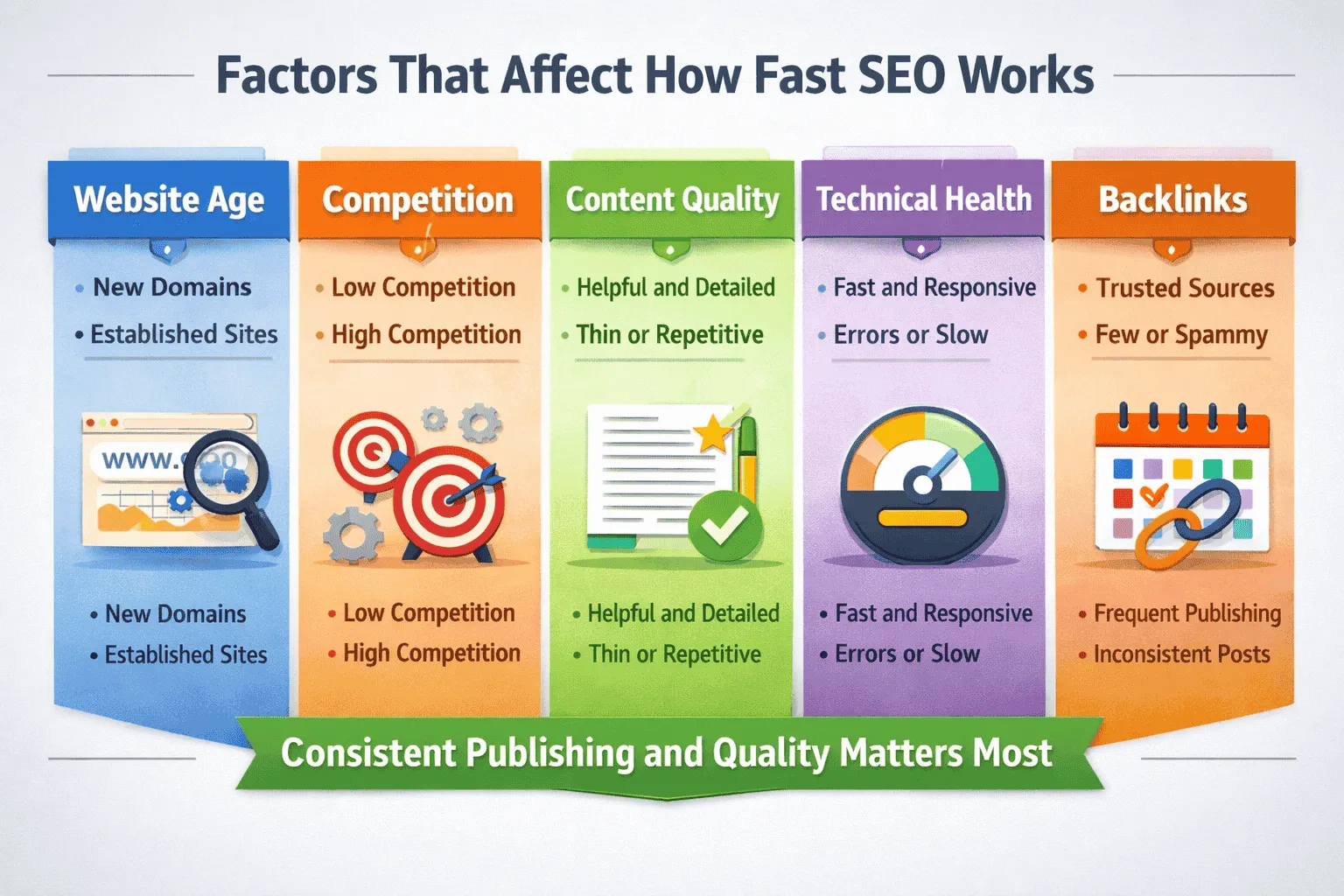
The appearance of the fast SEO results is dependent on several factors, and the knowledge of them can be used to establish reasonable expectations. The age of the websites is also a factor to take into consideration since old domains are usually easy to trust compared to new websites. Competition within your niche is also a factor, as competitive keywords will require more time to rank. The quality of the content plays a great role in performance, and useful and well-organized articles become more visible faster. Better indexing is facilitated by technical health as well as the speed of the site and mobile-friendliness. Trustworthy sources are considered to be more powerful in the case of authority, whereas regular publishing is taken to be relevant.
Website Age
The older domains usually have quicker trust building, as the search engines possess the past records.
New websites require a longer period of time to gain credibility.
Competition
If many strong websites target the same keyword, ranking takes longer.
Less competitive topics allow faster progress.
Content Quality
Helpful, detailed, and engaging content improves ranking potential.
Thin or repetitive content slows progress.
Technical Health
A website must load quickly and work on mobile devices.
Technical problems can delay results significantly.
Backlinks
Links from other sites signal trust.
Websites with strong backlinks often grow faster.
Consistency
Publishing regularly shows activity and relevance.
Inconsistent effort weakens momentum.
Why SEO Does Not Produce Instant Results
Search engines prioritize reliability. They want to show users trustworthy information.
To protect quality, they:
-
Test pages over time
-
Compare competitors
-
Analyze user behavior
This careful evaluation prevents manipulation but also means patience is necessary.
Measuring Progress the Right Way
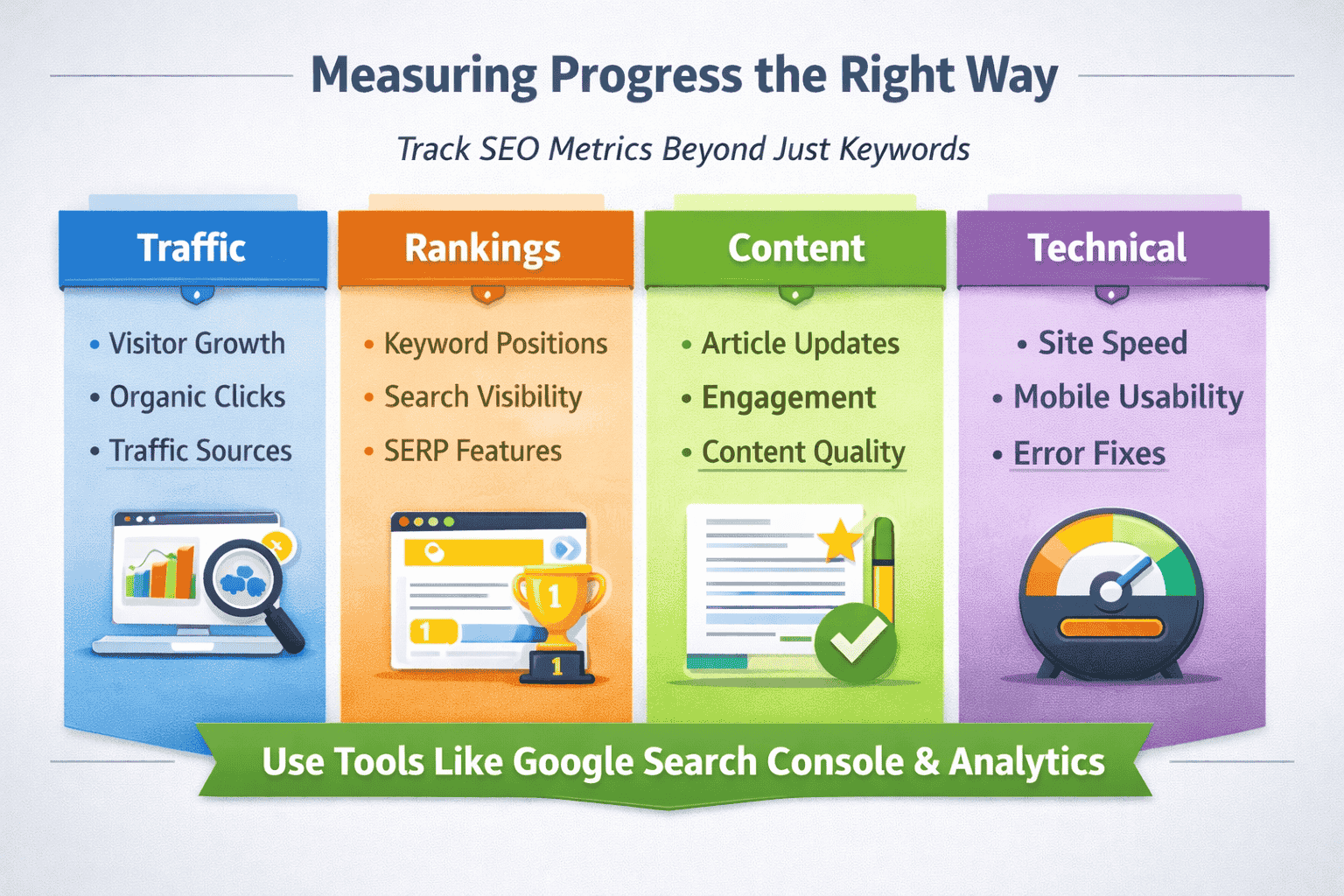
Ranking position alone is not enough.
You should also monitor:
-
Organic traffic trends
-
User engagement
-
Click rates
-
Conversion actions
These metrics reveal real performance improvements.
How to Improve Your SEO Speed
While you cannot force instant results, you can improve efficiency.
Focus on Achievable Keywords
Target realistic topics instead of highly competitive ones.
Publish Useful Content
Write for readers, not only search engines.
Optimize Site Performance
Improve loading speed and usability.
Build Internal Links
Connect related articles.
Earn Quality Backlinks
Gain mentions from relevant sources.
Update Old Content
Refreshing posts keeps them competitive.
Common Beginner Mistakes
Avoid these errors:
-
Expecting immediate traffic
-
Ignoring content quality
-
Publishing without research
-
Using spam backlinks
-
Stopping too early
Consistency is key.
Long-Term SEO Mindset
SEO success depends on perspective.
Instead of asking:
“Why am I not ranking yet?”
Ask:
-
Am I improving my content?
-
Am I learning from data?
-
Am I staying consistent?
A growth mindset supports long-term achievement.
CONCLUSION
SEO is a long term process which needs patience, regular usage and proper strategy in place but not immediate outcomes. Although the initial phases are characterized by establishing a good base by conducting research and optimization, significant growth is usually realized in the long run as the content, authority, and trust levels get built. Competition, quality, and technical performance are some of the factors that have an impact on the rate at which progress can be made. Through attainable expectations and frequency of enhancement, site owners are capable of realizing sustainable publicity and sustained traffic.