
SEO Audit Checklist
An SEO audit checklist is a useful tool that helps you review and improve your website’s SEO performance. It allows you to find problems that may be affecting your search engine rankings and fix them step by step. With an SEO audit, you can check whether your website follows search engine rules and provides a good experience for users.
SEO involves many factors such as website speed, mobile usability, content quality, keywords, and technical setup. An SEO audit checklist covers all these areas and makes the optimization process easy to understand.
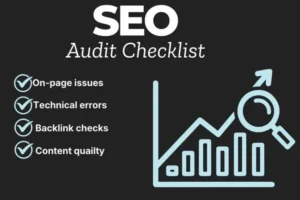
How an SEO Audit Helps Improve Rankings and Traffic
SEO audits assist your site in gaining search results because they identify the issues preventing the optimum performance of the website. The audit will look at important metrics including website speed, mobile friendliness, technical issues with the website, content quality, and keywords used throughout the site. Once these items are fixed on your site, search engines will easily crawl your site and figure out what it is about.
An SEO audit will also examine the quality of the content on the webpage to ensure that it meets the needs of users and has the appropriate keywords in a natural way. Content that is of higher quality attracts more visitors, keeps them on the page longer, and will generate positive signals to search engines.
SEO Audit Types
There are multiple varieties of SEO audits which consider separate areas of site optimization. Combined, they assist with enhancing your website’s rankings, traffic, and performance.
Technical SEO Audits
A technical SEO audit evaluates the technical condition of a site. The four major areas a technical audit will focus on are site speed, mobile-friendliness, indexing, and crawl errors as well as XML sitemap, robots.txt file, and security (HTTPS). The purpose of the technical SEO audit is to ensure that search engines can easily crawl and index your site content.
On-Page SEO Audits
An on-page SEO audit analyses the different components of each page. These components can include title tags, meta tags, the main heading, URLs, the use of keywords, internal links, and the site’s content structure. The function of an on-page audit will result in each of the pages being more relevant to your target keywords and to be more optimally configured.
Content SEO Audit
A content SEO audit is an assessment of the site’s content for value and relevancy; it will look for duplicate content, thin content, out of date content, keyword optimization (search engine visibility), and search intent (what are users searching for). Quality content will produce a greater amount of user interaction (engagement) and thus higher rankings.
Off-Page SEO Audit
An off-page SEO audit focuses on backlinks and online reputation. It analyzes link quality, anchor text, spam links, brand mentions, and overall domain authority. This audit helps build trust and credibility in search engines.
Local SEO Audit
A local SEO audit is important for businesses targeting local customers. It checks Google Business Profile optimization, NAP consistency, local keywords, reviews, and local citations. This audit helps improve visibility in local search results.
UX & Conversion Audit
This audit focuses on user experience and conversions. It reviews website navigation, layout, readability, mobile usability, bounce rate, and call-to-action placement. A better user experience leads to higher engagement and traffic growth.
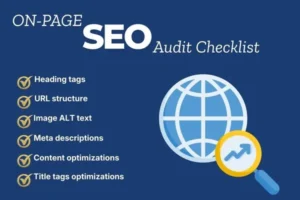
On-Page SEO Audit Checklist
An on-page SEO audit checks the elements on your web pages that help search engines understand your content. It focuses on improving relevance, readability, and user experience to achieve better rankings.
Review of title tags
The title tag is a key factor for on page seo. This review verifies that each page contains an individual title, the title includes the main keyword or phrase in the title naturally and that the title stays within the recommended length. A well optimized title will help to increase the click through rate and improve search engine results.
Audit of meta descriptions
A meta description provides a brief summary of a web page and is displayed in search result pages. This audit will verify that each page has an unique and compelling description. Although a meta description does not directly affect search engine rankings, it has a significant influence on the number of clicks and the amount of traffic generated.
Analysis of header tags h1-h6
Header tags will help to organize content within pages and improve the readability of the page as well. This analysis will validate that there is only one h1 tag per page along with a logical use of headers h2-h6 with respect to organizing content on the page. If the header structure is maintained in a clean fashion, both the user and search engines can understand the organization of the content.
Research of keyword use and optimization
In this step, I will examine how the use of keywords within the body of the content is applied within a specific web page. This will verify that the primary keyword used in the title, headings, URL and content of the body appear naturally and without abnormal frequency within the body of the content.
Proper use of keywords will help to increase the relevance and ranking of the web page.
Review of internal linking structure
Internal links connect pages that are relevant to one another on a web site. This review will provide assurance that the internal linking is used in an optimal manner. This will be verified by checking the use of relevant anchor text, placement of the link and no broken links. A well organized internal linking structure is beneficial for both users as well as for search engines.
Keyword Research and Ranking Audit
A keyword research and ranking audit gives you an insight into where your site is targeting keywords and how well they are performing in search results. It will show you if you are targeting the right keywords, and if so, are your pages ranking where they ought to be?
The first part of the Audit is to look at whether all of your pages are targeting a single primary keyword. Most of your important pages need to be targeting a single primary keyword and a few secondary related keywords so as to avoid confusion with the search engines.
The audit will also check that the keywords selected are in alignment with the user’s intended search intent. If your content does not meet what the user’s expectation was, then your rankings and traffic could be negatively impacted even if the keyword is included.
At this stage of the audit, all of the keywords checked are located in a natural way, such as within the title tag, headers, URL string, and the content. Proper placement of keywords allows for a more relevant link to the search result without keyword stuffing.
Next, we will check the current rankings for the keyword in the search engine results to see if any of your keywords are currently on pages 2 and 3, so that you can work to get them moved to page 1 through optimization.
At this stage of the audit, we will do a keyword gap analysis to find any keywords that your competitors are ranking for, however, you are not currently ranking for those same keywords. If you target these keywords, it will help increase your search traffic and visibility.
Content Quality and SEO Audit
A quality assurance and SEO audit of your website’s content is about determining the quality, relevance, and optimization of your website content for both users of the site and search engines. High-quality website content can improve search engine rankings, increase the amount of organic traffic going to the website, and instill trust among your audience.
Content Relevance and User Intent
The second part of this process is to determine if your website content is relevant to what users are looking for. Does your content answer user questions and meet their search objectives? (informational, commercial, or transactional)?
Content Originality & Uniqueness
During the Content Audit, we will review your website content to ensure that no other websites have any duplicate copies of your website content. Duplicate or thin content can negatively affect your search engine rankings. However, one-of-a-kind website content is a positive factor in building trust with your audience and improving your website’s search engine optimization.
Content Depth & Value
This is to examine if your website content provides sufficient information and real value; high-quality, well-researched, and detailed website content performs better than low-quality website content, regardless of how short your website content is.
Keyword Optimization within Content
When you use keywords in the headings, paragraphs, and image alt text of your content, those keywords should be present naturally. The Content Audit will examine if the keywords in your content have been placed correctly, so that your search engine optimization does not appear to have been over-stuffed.
Content Freshness & Updates
Updated content is what search engines are looking for. The Content Audit will identify pages on your website that are out of date, and we will provide suggestions for updating those pages by adding new or updated information (e.g. statistics or examples, etc.).
Readability & Organization
The content of your website should be easy to read. In addition to being easy to read, organization of content on your website creates user engagement with your site. Therefore, use clear headings, short paragraphs, and simple words in your website content to help achieve this objective.
Off-Page SEO and Backlink Audit
An evaluation of a website’s quality and performance using off-page search engine optimization. In this case, it is determined by looking at the presence of backlinks to your website outside of your domain and brand to determine what impact they will have on your search engine ranking.
Backlink profile evaluation
A backlink is any link that points back to your site. When you’re checking your site’s backlinks, you want to know how many total backlinks you currently have, how many different domains link back to you, and what kind of quality/authority those domains possess. The greater the number of high-authority links pointing to your site, the better your site will rank in search engine results pages (SERPs).
Check for Link quality and authority
Not all backlinks point to your site are high-quality, so performing an off-site SEO audit helps to identify any low-quality or spammy backlinks that could negatively affect your search engine ranking.
Identify Spam and Toxic Links
Both toxic and spam links will negatively impact your ability to rank well in the SERPs. Therefore, an off-page SEO audit will help identify the spam and harmful backlinks, which will allow you to remove or disavow any backlinks that damage your website authority.
Evaluate Competitors’ Backlink Profiles
Analyzing your competitors’ backlink profiles will provide you with valuable information that could promote your own linking strategy as well as provide new opportunities for backlinks to your domain.
Analyze Brand Mentions and Online Presence
An off-page SEO audit will also review how your brand is mentioned online, including any references to your business that are not accompanied by a link.
Local SEO Audit Checklist
- An audit checklist of local SEO can assist the improvement of a businesses visibility in search results that are local. The verifications that your business’ information is correct, optimized, and consistent for the entire process of searching through engines and local platforms.
NAP Consistency:
• Name, Address, and Phone Number are all the Same Everywhere
• Matching What Is On Your Website / Google / Directories
• No Old or Duplicate Listings ExistedLocal Keyword Optimization:
• Title and Content To Contain Local Keywords
• Use Of Keywords in Relation To Customers Locations
• City and Service Pages Utilized For OptimizationLocal Directories And Citations:
• Listing A Business On Popular Local Directories
• Citations are accurate and as Complete as Possible
• Duplicates or Spam Same ListingsReview and Rating Audit:
• Customer Reviews Present and Available
• Most Current and Authentic
• Business Responds to Review and Respectfully
• *Stars are VisibleLocal Landing Pages:
• Pages For Every Service and City
• Optimized For Headings and Body
• Must Have Details How To Contacts and MapsMap Pack Visibility Audit:
• Google Map Listing
• Reviewed Accuracy for Distance, Relevance, and Prominence Mobile and User Experience Audit:
• Website Must Work Well on Mobile
• Click On the Website To Be Returned Back To It Using a Link For Location
Website Crawlability and Indexing Check
A website’s crawlability (how easy it is for search engines to “crawl” (or access), read, and “index” (or store) your website pages in their database) and the successful indexing of a website’s pages means that those pages will appear in search results when Google crawls or indexes your website. This check (Crawlability and Indexing) assures that your important pages are accessible and correctly indexed by GOOGLE.
Checking Your Website’s Index Status on Google
Checking the index status of your website allows you to determine which pages of your website are indexed by Google.
Reviewing the Robots.txt File
The robots.txt file provides search engines with a guide for crawling your website (pages they are allowed to crawl and pages they are not allowed to crawl). Reviewing your robots.txt file is important, as it assures that you are not unintentionally blocking a page on your website that you want to be indexed by Google. A properly configured robots.txt file will assist with controlling the crawlability of your website and will assist with preventing the indexing of pages that do not need to be indexed.
Analyzing the XML Sitemap
An XML sitemap is a sitemap that uses XML to document all the pages of a website.