
What Is Anchor Text?
Anchor text is the clickable text in a link that takes users to another page or website. It helps people understand what they will see after clicking the link. Anchor text is usually shown in a different color or underlined. Search engines also use anchor text to understand what the linked page is about, which helps improve website SEO when used correctly.
Examples
Click here to learn about digital marketing
Read our blog writing tips

How Anchor Text Works ?
Anchor text works by turning words into a clickable link. When a user clicks the anchor text, it takes them to another page or website. The words used in the anchor text tell users what they will find on the linked page. Search engines also read anchor text to understand the topic of the linked page and decide how relevant it is.
Importance of Anchor Text in SEO
Anchor text plays an important role in SEO because it helps search engines understand the topic of the linked page. When you use clear and relevant anchor text, search engines can easily guess what the page is about. This helps websites appear in the right search results. Good anchor text also helps connect related content, which improves overall website structure and SEO performance.
How Search Engines Use Anchor Text
Search engines read anchor text to learn about the content of the linked page. They compare the anchor text with the page’s content to check relevance. If many websites link to a page using meaningful anchor text, search engines consider that page useful and trustworthy. This helps search engines decide which pages should rank higher for certain keywords.
Impact on Rankings
Anchor text can have a strong impact on search engine rankings. When links use relevant and natural anchor text, search engines see it as a positive signal. It shows that other pages support the topic of the linked page. However, overusing the same keywords or using misleading anchor text can harm rankings. Balanced and natural anchor text helps improve rankings over time.
Role in User Experience
Anchor text improves user experience by clearly showing where a link will take the user. When users see descriptive anchor text, they feel more confident clicking it. This makes content easier to read and helps users find information faster. Good anchor text also keeps users engaged and helps them move smoothly through a website.
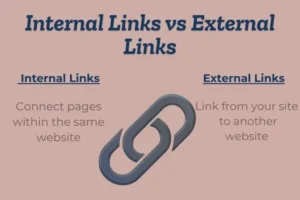
Internal Links vs External Links
Internal links and external links help connect web pages using anchor text. Internal links connect pages on the same website, while external links connect to pages on other websites. Both are important for SEO and user experience.
Internal Anchor Text
Internal anchor text is used when linking one page of a website to another page on the same website. It helps search engines understand the website structure and helps users easily find related content. Good internal anchor text improves navigation and helps important pages rank better.
External Anchor Text
External anchor text is used when a link points to a different website. It tells search engines what the linked page is about. When reliable websites link to your site using relevant anchor text, it increases trust and authority in search engines.
SEO Benefits of Both
Both internal and external anchor text are useful for SEO. Internal anchor text improves website organization, page indexing, and user experience. External anchor text helps build credibility, trust, and better search rankings. Using both in a natural way improves overall SEO performance.
Branded Anchor Text
Branded anchor text uses a company or brand name as the clickable link. It helps build brand awareness, trust, and authority because it looks natural to both users and search engines. When websites link using a brand name, search engines see the brand as reliable and credible, which supports strong and safe SEO performance.
- Nike
Amazon - HubSpot
Brand Authority and Trust
Branded anchor text helps build trust and authority. When many websites link using a brand name, search engines see the brand as reliable and popular. This type of anchor text looks very natural and is safe for SEO. It also helps users recognize well-known brands easily.
Generic Anchor Text
Generic anchor text uses common words like “click here,” “read more,” or “learn more” instead of keywords or brand names. It is easy for users to understand and helps with navigation, but it does not give much information to search engines about the linked page. Because of this, generic anchor text has limited SEO value and should be used carefully along with other types of anchor text.
- Click here
- Read more
- Learn more
- Visit this page
SEO Impact
Generic anchor text has little SEO value because it does not describe the linked page. Search engines do not learn much from it. However, it is useful for user experience when the context is clear. Generic anchor text should be used in moderation and mixed with other anchor text types.
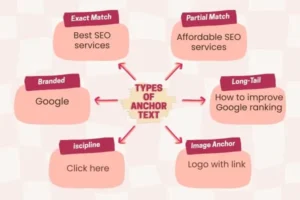
Types of Anchor Text
Exact Match Anchor Text : This type uses the exact keyword you want to rank for.
Partial Match Anchor Text :This includes the keyword with extra words.
Branded Anchor Text : This uses a brand name as the anchor text.
Generic Anchor Text : This uses common words that do not describe the topic.
Naked URL Anchor Text : This shows the full website URL as the anchor text.
Image Anchor Text : When an image is used as a link, the alt text of the image acts as anchor text.
Why Anchor Text Types Matter
Using different types of anchor text makes links look natural and helps SEO. A mix of anchor text types improves rankings and user experience.
Exact Match Anchor Text
Exact match anchor text uses the exact keyword that the linked page is targeting. The anchor text is the same as the main keyword.
Example:
If the keyword is best running shoes, the anchor text will be best running shoes.
Pros and Cons
Pros:
- Clearly tells search engines what the page is about
- Can help improve keyword relevance
- Useful for SEO when used carefully
Cons:
- Overuse can look unnatural
- Too many exact matches may harm rankings
- Can be seen as spam by search engines
When to Use It
Exact match anchor text should be used carefully and naturally. It is best for:
- Internal linking
- A few high-quality backlinks
- When it fits naturally in the content
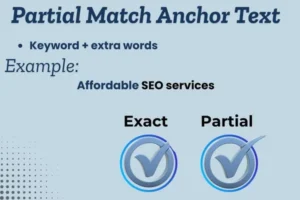
Partial Match Anchor Text
Partial match anchor text includes the main keyword with extra words added to it.
Examples:
- best shoes for running
- guide to running shoes
- affordable running shoes online
SEO Benefits
- Looks more natural than exact match
- Reduces risk of over-optimization
- Helps search engines understand page topics
Improves user experience
Anchor Text and Google Algorithms
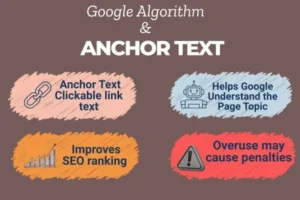
Anchor text plays an important role in how Google understands links. Google uses anchor text to learn what a linked page is about. However, Google also checks whether anchor text is used naturally. If anchor text looks fake or over-optimized, it can harm a website’s rankings.
Google Penguin Update
The Google Penguin update was created to stop websites from using spammy link-building techniques. Before Penguin, many sites ranked higher by using the same exact-match anchor text again and again. Penguin changed this by focusing on link quality and natural anchor text. Websites with unnatural or excessive keyword-rich anchor text were negatively affected.
Spam and Penalties
Using spammy anchor text can lead to Google penalties. This includes using too many exact-match keywords, irrelevant anchor text, or links from low-quality websites. When Google detects these practices, it may lower rankings or remove pages from search results. To avoid penalties, anchor text should be natural, relevant, and varied.
Best Practices to Stay Safe
Use a mix of anchor text types
Avoid repeating the same keyword too often
Focus on helpful and relevant content
Get links from trusted websites
Anchor Text Strategy for New Websites
Anchor text strategy for new websites should focus on being natural, safe, and user-friendly. New websites do not yet have strong trust with search engines, so using simple and balanced anchor text is very important. At the beginning, it is best to use more branded, generic, and partial match anchor text instead of exact match keywords. This helps links look natural and avoids spam signals. Internal linking should be the first priority, using clear anchor text to connect related pages and help search engines understand the site structure
Start With Branded and Generic Anchor Text
New websites should focus more on branded and generic anchor text. This looks natural and safe to search engines.
- Brand name
- Click here
- Read more
Use Exact Match Anchor Text Carefully
Exact match anchor text should be used very limited on new websites. Too much keyword-focused anchor text can look spammy and may hurt rankings.
Prefer Partial Match Anchor Text
Partial match anchor text is safer for new websites. It includes keywords with extra words and looks more natural.
- guide to anchor text
- learn about SEO strategies
Focus on Internal Linking First
Before building external links, use internal anchor text to connect your pages. This helps search engines understand your site structure and improves user experience.
Build Links Slowly and Naturally
New websites should grow links slowly. Avoid sudden spikes in keyword-rich anchor text. Natural growth helps build trust with Google.
Best Practices for New Websites
- Use a mix of anchor text types
- Keep anchor text relevant to content
- Avoid over-optimization
- Focus on quality content first
Advanced Anchor Text SEO Techniques
Advanced anchor text SEO means using links in a smart and natural way so Google understands your content without thinking it is spam.
Use Different Types of Anchor Text
Do not use the same words again and again. Use a mix of:
- Branded anchor text
- Partial match anchor text
- Generic anchor text
Place Anchor Text NaturalIS
Anchor text should fit naturally in the sentence. Links inside useful content work better than links placed randomly.
Use Internal Links Smartly
Link important pages from other pages on your website. Use clear and simple anchor text so search engines can understand page topics.
Avoid Too Many Keywords
Using too many exact keywords can harm SEO. Change words and use similar meanings to stay safe.
Check and Clean Bad Links
Remove or disavow spammy links with bad anchor text. Clean links help protect rankings.
Tools to Analyze Anchor Text
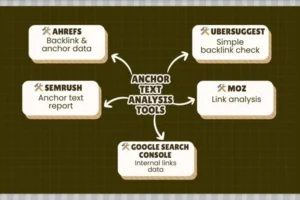
Anchor text analysis tools help you check what type of anchor text is used in your backlinks and internal links. These tools help you find spam, over-optimized keywords, and improve SEO.
Google Search Console
Google Search Console shows which websites link to your site and the anchor text they use. It helps you understand how Google sees your links and find any risky anchor text.
Ahrefs
Ahrefs is a popular SEO tool that shows detailed anchor text data. It helps you see the most common anchor texts, backlinks, and link quality.
SEMrush
SEMrush helps analyze anchor text in backlinks. It shows keyword usage, link sources, and helps find toxic or spammy links.
Moz Link Explorer
Moz Link Explorer shows anchor text distribution and domain authority. It helps check link quality and balance anchor text types.
Screaming Frog
Screaming Frog is useful for analyzing internal anchor text. It helps find broken links, duplicate anchors, and missing anchor text.
Common Anchor Text Mistakes to Avoid
Anchor text is very important for SEO, but using it incorrectly can harm your website’s rankings. Many websites make simple mistakes without realizing their impact. Avoiding these mistakes helps keep your site safe, improves user experience, and supports long-term SEO growth.
Overusing Exact Match Anchor Text
One of the most common mistakes is using the same exact keyword as anchor text too many times. This looks unnatural to search engines and may trigger spam signals. Google prefers natural language, so repeating exact keywords can reduce rankings instead of improving them.
Using Irrelevant or Misleading Anchor Text
Anchor text should clearly describe the linked page. Using unrelated or misleading words confuses users and search engines. When anchor text does not match the content, it reduces trust and can increase bounce rates.
Too Much Generic Anchor Text
Generic anchor text like “click here” or “read more” does not give any useful information about the page. While it is okay to use sometimes, overusing it weakens SEO and makes content less informative.
Not Using a Balanced Anchor Text Mix
Using only one type of anchor text, such as branded or keyword-based, looks unnatural. A healthy mix of branded, partial match, generic, and natural anchor text helps maintain SEO balance.
Linking to Low-Quality or Spam Websites
Links pointing to low-quality or spammy websites can damage your SEO. Even if your anchor text is good, poor link quality can negatively affect rankings.
Ignoring Internal Anchor Text Optimization
Many website owners focus only on backlinks and forget internal links. Weak internal anchor text can hurt site structure, crawling, and user navigation.
Stuffing Keywords in Anchor Text
Trying to force keywords into anchor text makes content hard to read. Keyword stuffing can trigger Google penalties and reduce content quality.
Not Monitoring Anchor Text Regularly
Failing to check anchor text over time can lead to SEO problems. Regular audits help identify spammy links and fix issues early.